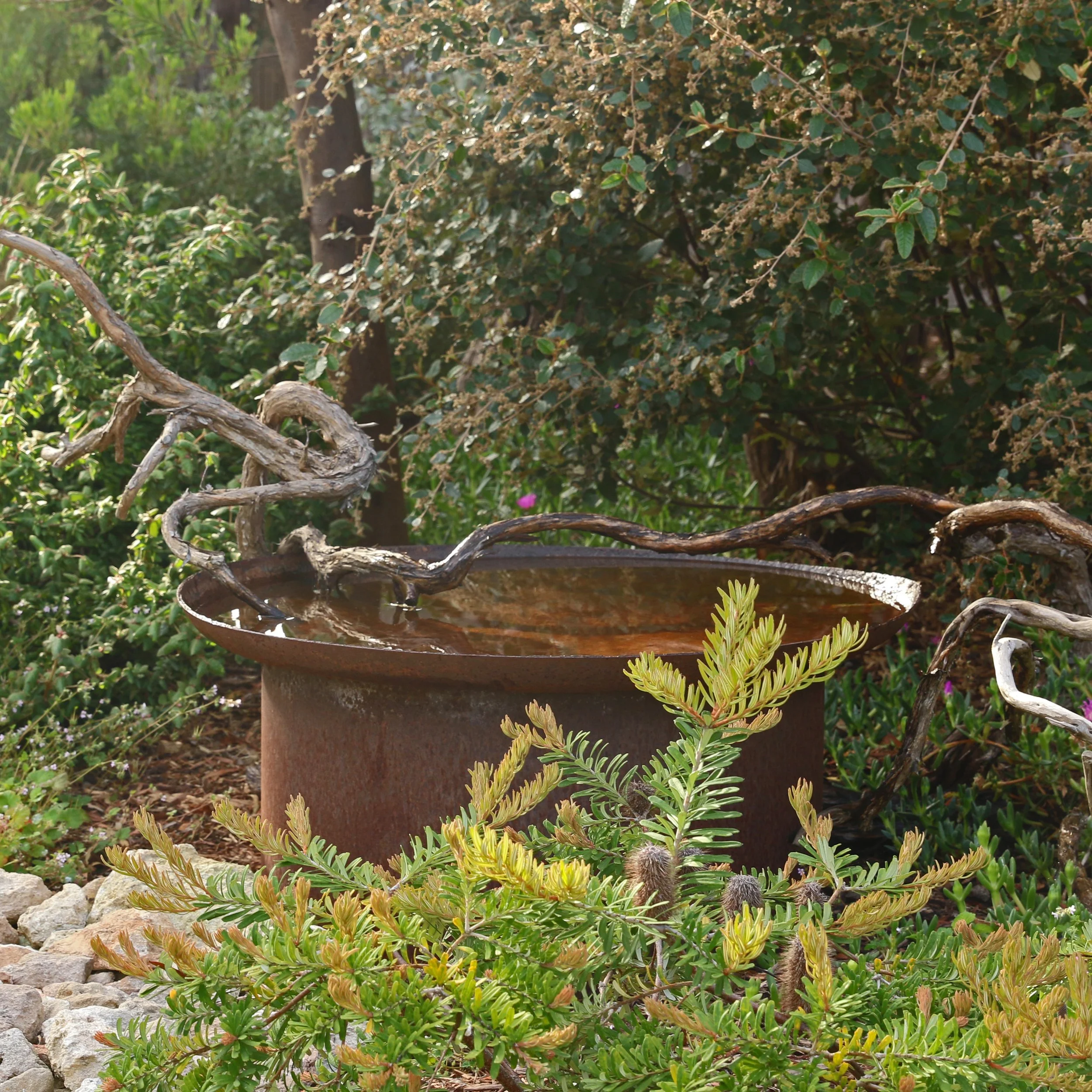
Birdbaths
A great addition to a wildlife garden.
Creating a local native garden for wildlife will attract birds, they’ll begin to use your garden as a pit stop whilst flying to and from other areas of bushland and local native gardens or plantings.
A highlight for their visit is a bird bath. Placing a bird bath in the garden and providing consistent fresh water gives birds a reason to visit and perhaps live in the garden or close by. Providing a shallow birdbath is what most birds prefer, shallow water creates accessibility for them as they drink and bath, therefore are able to stand in the water.
Sticks and branches close by as well as placed across the birdbath provides even more accessibility for birds , especially the small bird species. Birds will appreciate shrubs planted near the bird bath for safe spots to hide if they need to as well as exposed branches to hop onto while spending time at the birdbath. Keeping a healthy bird bath is high maintenance. So birds don’t ingest parasites, the water should be refreshed every two days. For a proper clean, once a week scrubbing the bird bath with a bristle brush is recommended.
Consider cats in your area before purchasing a bird bath. Think about predators, dogs, cats and foxes and the safety of the birdbath. Elevating the birdbath can be helpful to keep the main predators away.
Some days in our garden the bird bath has a succession of bird species that come through. Observing their interactions between each other can be very amusing as well as their interactions between bird species. Some of the smaller bird species bathe together such as brown thorn bill and fairy wren. Turtle Doves often spend the longest time in the bath, sitting in the water contemplating life.
Birdlife Australia’s website has endless information about our wonderful Aussie birds, a great place to learn about different bird species.