Mornington Peninsula National Park
Inspiration for garden design on the southern Peninsula.
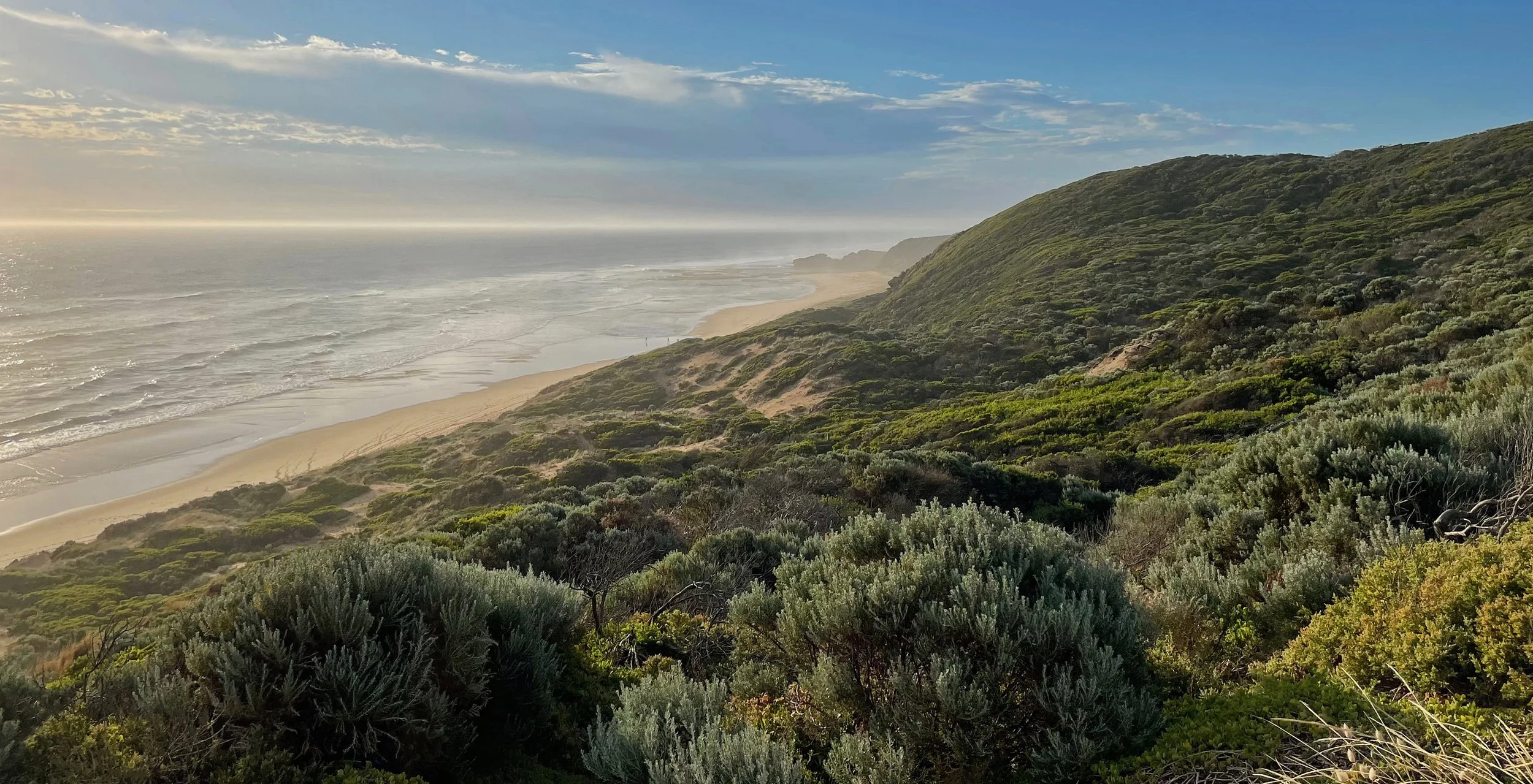
A good place to start the Saltmist Blog would be The Mornington Peninsula National Park. Its the best place to go for inspiration for designing a garden on the Southern Peninsula. Walking though the Moonah woodland’s past the open areas of grasses and sand dunes lead to either the top of a rocky limestone cliff or a sandy beach looking across the southern ocean.
Mornington Peninsula National Park stretches along the ocean beaches from Portsea to Flinders. Its the largest area of native vegetation on public land on the Mornington Peninsula with a forty kilometre stretch of coastline. Its a haven for wildlife providing ideal habitat for sea birds like the Sooty Oyster Catcher and Nankeen Kestrel. Its tidal rock pools providing protection for an abundance of fish and crustaceans.
The coastal vegetation provides habitat for reptiles like the Jackie Lizard, small woodland birds like the Eastern Spine Bill and Scrub Wrens and some of our favourite mammals, Wallabies, Echidnas and Swamp Rats. It protects threatened and endangered species like the Hooded Plover. While the rocky cliffs are home to pairs of Peregrine Falcons.
Parks Victoria manage the national park providing many walking tracks. The Coastal Walk is a wonderful 2 day (30km) walking track from Portsea to Flinders. It meanders along the cliffs and beaches and through areas of dense woodland. All or parts of this track I highly recommend to enjoy the beauty of the area.
Walking along the paths you will meander through different plant communities. Two commonly encountered plant communities are Coastal Moonah Woodland where the Moonah, Tea tree and She-oaks grow providing a low canopy and shade with shrubs and grasses growing in amongst them. The other main vegetation type is Coastal Headland Scrub which is open without trees where shrubs like Correas, Olearias, and Cushion Bush grow as well as grasses, Poas and Austrostipa to name a few. These grow in amongst large open areas of rocks and sand dunes.
Creating a small patch of this dreamlike environment in the backyard if your living on the Southern Peninsula is absolutely possible, in fact not that difficult to do as the soil conditions in your back yard are the same. This is why growing local indigenous plants works so well. By growing the local plants that are accustomed to this land, animals, birds and insects that frequent the national park will then follow. They will frequently visit or make your garden a permanent home as you have provided them with the habitat they need.
Planting local native plants not only creates a beautiful looking garden, but a garden for wildlife contributing to local biodiversity.